

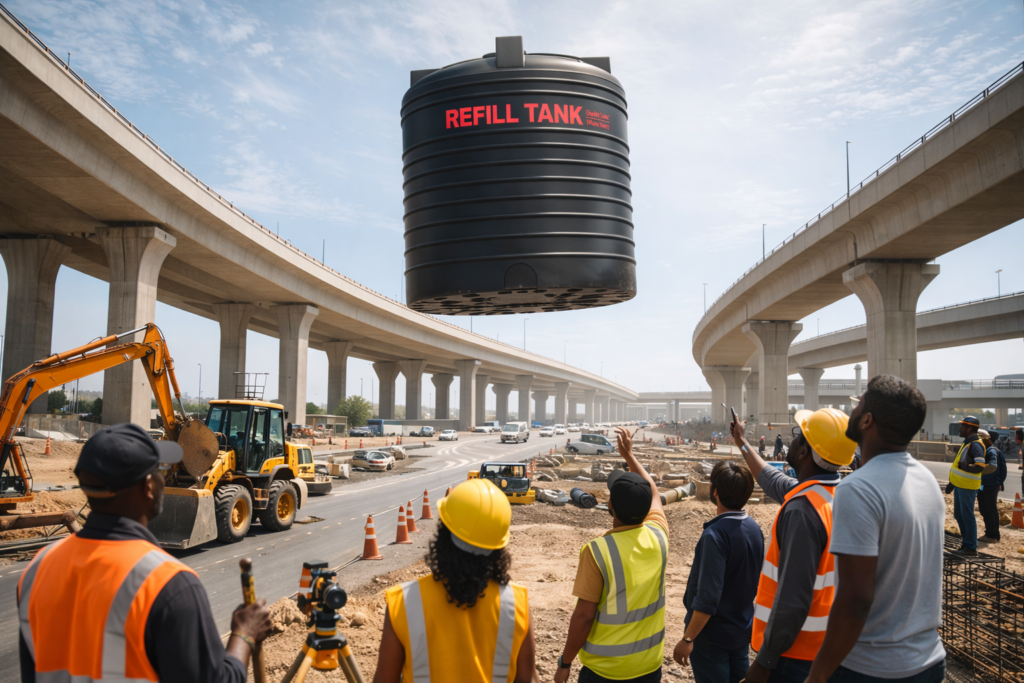
Water tanks are no longer optional in Kenya. From Nairobi estates to rural homesteads, reliable water storage has become a necessity due to inconsistent municipal supply, seasonal droughts, and rising water costs.
This guide breaks down water tank prices in Kenya, types of water storage tanks, and how to choose the right tank based on usage, location, and budget, using real market patterns rather than generic theory.
Why Water Tanks Are Essential in Kenya Today
Table of Contents
ToggleKenya’s water infrastructure struggles to meet demand, especially in:
Rapidly growing urban areas (Nairobi, Kiambu, Machakos)
New housing estates without permanent water connections
Commercial premises with high daily consumption
As a result, water tanks act as both storage and insurance, allowing homes and businesses to buy water when available and use it when supply is interrupted.
Types of Water Tanks in Kenya (By Material & Use)
1. Plastic (Polyethylene) Water Tanks
These are the most common tanks in Kenya.
Why they dominate the market
UV-stabilised for high heat
Rust-free and lightweight
Suitable for both rooftop and ground installation
Best for
Residential homes
Rental apartments
Small businesses
Popular examples include tanks from Kentank and Roto.
2. Jumbo Water Tanks (Large-Capacity Storage)
Jumbo tanks usually start from 5,000 litres and above.
Where they are used
Apartment blocks
Schools and hospitals
Construction sites
These tanks are almost always ground-mounted and often paired with pump systems.
3. Underground Water Storage Tanks
Installed below ground level, these tanks are chosen when:
Space is limited
Aesthetic considerations matter
Long-term temperature stability is needed
They cost more due to excavation and installation but are common in high-end residential developments.
4. Steel and Concrete Tanks
Less common today, but still used in:
Industrial plants
Municipal projects
They require professional installation and regular maintenance to prevent corrosion or cracking.
Water Tank Prices in Kenya (Realistic Market Ranges)
Below is a Kenya-specific pricing snapshot based on current supplier trends:
| Capacity | Typical Use | Estimated Price (KES) |
|---|---|---|
| 500 Litres | Small household backup | 6,500 – 9,000 |
| 1,000 Litres | Standard home | 9,500 – 13,500 |
| 2,000 Litres | Family + rental units | 18,000 – 25,000 |
| 3,000 Litres | Apartments | 26,000 – 35,000 |
| 5,000 Litres | Commercial / jumbo | 45,000 – 65,000 |
| 10,000+ Litres | Institutions | Custom pricing |
Key insight: Prices vary by brand, thickness (layering), UV treatment, and delivery distance, not just capacity.
Types of Water Storage Tanks (By Installation Method)
Rooftop Tanks
Usually 500–2,000 litres
Gravity-fed
Ideal for urban homes
Ground Tanks
Any size
Paired with pumps
Easier to maintain
Underground Tanks
Space-saving
Higher installation cost
Used in premium builds
How to Choose the Right Water Tank in Kenya
1. Calculate Daily Water Consumption
Average household usage:
1 person: ~100–150 litres/day
Family of 4: ~600 litres/day
Rule of thumb: Choose a tank that covers 3–5 days of usage.
2. Consider Water Source
Municipal supply → medium tank (1,000–2,000L)
Borehole or rainwater harvesting → larger tank (3,000L+)
3. Check Installation Space
Rooftop load limits
Ground clearance
Accessibility for delivery
4. Compare Brand Quality, Not Just Price
Low-cost tanks may:
Deform under heat
Crack at fittings
Have poor UV resistance
Always check:
Wall thickness
Warranty
Manufacturer reputation
Common Questions About Water Tanks in Kenya
Which water tank is best in Kenya?
For most homes, UV-stabilised plastic tanks from established manufacturers offer the best balance of price, durability, and availability.
How long do plastic water tanks last?
With proper installation, quality tanks last 10–15 years in Kenyan conditions.
Can I use water tanks for rainwater harvesting?
Yes. Ensure:
First-flush systems
Covered inlets
Regular cleaning
Frequently Asked Questions About Water Tanks in Kenya
What is the average price of water tanks in Kenya?
The price of water tanks in Kenya typically ranges from KES 6,500 for 500-litre tanks to KES 65,000+ for 5,000-litre jumbo tanks. Prices vary based on capacity, brand, wall thickness, UV protection, and delivery location.
Which water tank brand is best in Kenya?
Well-established brands such as Kentank and Roto are widely used due to consistent quality, UV-stabilised materials, and availability of spare fittings across Kenya. The best choice depends on your budget and intended use.
How many litres of water does a typical Kenyan household need?
A typical household uses 100–150 litres per person per day. For a family of four, a 1,500–2,000 litre water tank is usually sufficient to cover 3–4 days of water usage.
What are the main types of water tanks used in Kenya?
The most common types of water tanks in Kenya are:
Plastic (polyethylene) tanks – for homes and businesses
Jumbo tanks – for apartments, schools, and commercial use
Underground tanks – for space-limited or high-end developments
Steel or concrete tanks – mainly for industrial applications
Are plastic water tanks safe for drinking water?
Yes. High-quality plastic water tanks made from food-grade polyethylene are safe for storing drinking water when properly installed, covered, and cleaned regularly.
How long do plastic water tanks last in Kenya?
A quality plastic water tank can last 10–15 years under Kenyan climate conditions, provided it is UV-stabilised and installed on a level base.
Is it better to install a water tank on the roof or on the ground?
Rooftop tanks are ideal for gravity-fed systems and smaller capacities
Ground tanks are better for large capacities and easier maintenance
The best option depends on available space, structural load limits, and water usage.
Can water tanks be used for rainwater harvesting in Kenya?
Yes. Water tanks are commonly used for rainwater harvesting when paired with gutters, first-flush systems, and filters. This is especially effective in areas with seasonal rainfall.
What size water tank is best for areas with water rationing?
In areas with frequent water rationing, a minimum of 2,000 litres is recommended for households, while apartments and businesses should consider 3,000 litres or more.
Do water tank prices vary by location in Kenya?
Yes. Prices can vary due to transport costs, especially for deliveries outside major towns such as Nairobi, Nakuru, and Mombasa.
