

Septic Tank Design in Kenya: Standard & Biodigester Guide 2026
Table of Contents
Toggle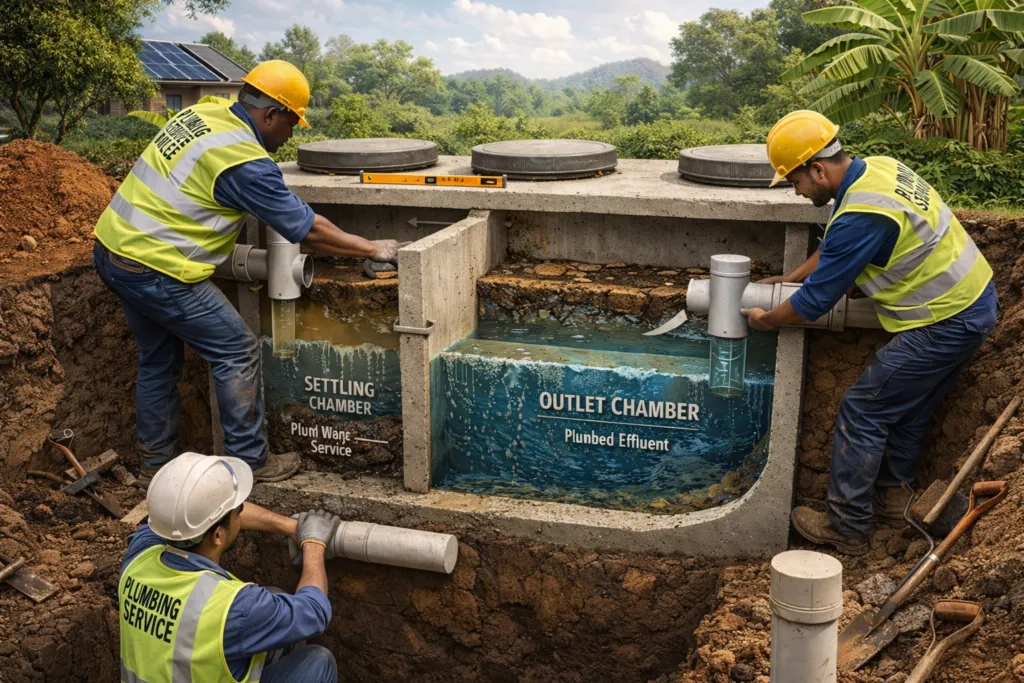
In Kenya’s rapidly growing urban and peri-urban areas—from the red soil of Nairobi’s Karen and Kitengela to the sandy reaches of Mombasa—proper waste management is a legal and health requirement. If you are building a residential home or a commercial apartment block, choosing the right septic tank design is your most critical infrastructure decision.
1. Standard Septic Tank Design in Kenya
Most traditional builds in Kenya utilize a reinforced concrete two or three-chamber system. According to the National Construction Authority (NCA) and WASREB guidelines, a standard design must be watertight and sized based on occupancy.
Capacity: For a typical 4-bedroom family home in Nairobi, a tank capacity of 4,500 to 6,000 liters is recommended.
Structure: Must include a T-junction inlet, baffle walls to separate sludge from effluent, and a vent pipe to release methane gas safely.
The Soak Pit: In areas like Meru or Kiambu with porous red soil, a standard soak pit works well. However, in “black cotton soil” areas (like parts of Eastlands or Syokimau), you may need a drainage field or a more advanced biodigester.
2. Why Biodigester Septic Tanks are Taking Over Nairobi
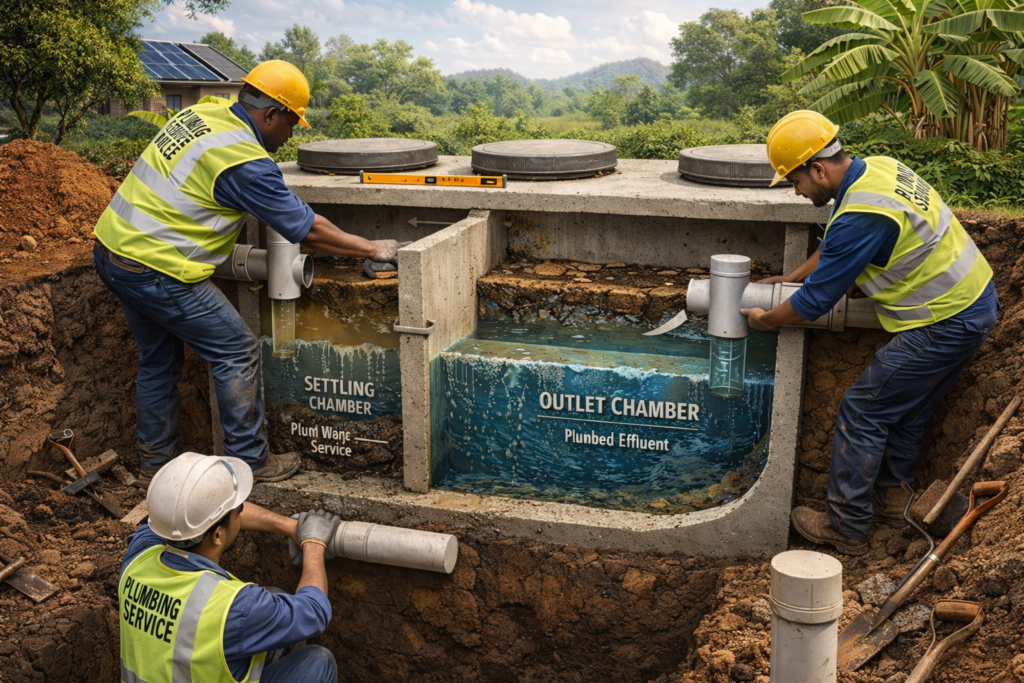
The biodigester septic tank design has become the preferred choice for Kenyan developers because it solves the “exhausting” problem.
No Exhausting Required: Unlike traditional tanks that need “honey-suckers” (exhausters) every few years, a biodigester uses anaerobic bacteria to break down waste into water and gas.
Space Saving: A standard biodigester (approx. 1.1m deep) is much smaller than a traditional 3-meter deep concrete tank, making it ideal for 50×100 plots in congested towns.
NEMA Approved: Modern biodigesters are fully compliant with the National Environment Management Authority (NEMA) standards for on-site sanitation.
biodigester septic tank price: They less costly and cheaper to maintain
3. Key Technical Drawings & PDF Specs
When looking for a drawing biodigester septic tank design PDF, ensure it includes:
The Digestion Chamber: Where the heavy lifting of waste breakdown happens.
Bio-Media Filters: To provide surface area for bacteria.
Effluent Discharge: Usually directed to a small French drain or used for gardening (after secondary treatment).
Pro Tip for DIYers: While a homemade septic tank design can save costs, ensure you use a 1:2:4 concrete mix ratio for the walls to prevent seepage into your neighbor’s plot, a common cause of legal disputes in Nairobi County.
Comparison: Septic Solutions for Kenyan Towns
| Feature | Concrete Septic Tank | Biodigester Tank |
| Best For | Large rural plots | Urban 50×100 plots |
| Installation Time | 2–3 Weeks | 1–3 Days |
| Nairobi Soil Compatibility | Struggles in Black Cotton | Excellent in all soils |
| Exhausting (Sucking) | Every 2–5 Years | Not required |
| Estimated Cost (KES) | KES 150,000 – 400,000 | KES 80,000 – 180,000 |
.
Regulatory Compliance in Kenya
Before you break ground in Nakuru, Kisumu, or Eldoret, ensure your standard septic tank design is part of the architectural plans approved by your County Government.
Distance: Must be at least 10 meters from any borehole or water source.
Ventilation: Must have a vent pipe extending above the roofline to prevent odors in the neighborhood.
Conclusion
Whether you need a drawing biodigester septic tank design for a modern apartment in Ruaka or a standard septic tank design for a farmhouse in Narok, the goal is the same: sustainability and hygiene.
Author
Written by: Titus Muchoki Mburu
Role: Full-Stack Developer & Digital Marketing Specialist
Experience: 5+ years in web development, SEO, and e-commerce content for building materials and plumbing products across Kenya and Australia.
